Project Background
CARLA staff strive to integrate second-language acquisition (SLA) research more effectively into language teacher education. In our view, what works best is a bottom-up, “learn by doing” approach using Exploratory Practice (Allwright & Hanks, 2009) as a framework; in this approach, teachers are viewed not as consumers of SLA research, but as active participants themselves in the study of learner language (Tarone & Allwright, 2005; Tarone, 2006; Tarone, 2009). The multi-media interactive materials on this website are the intended to integrate a “learn by doing” focus on learner language and its development into the heart of language teacher education.
Allwright’s Exploratory Practice is an effective framework within which language teachers learn to study life and learning in their own classrooms, identify learning needs as they arise, and adjust their pedagogical practice to address those needs. Exploratory Practice provides a theoretical rationale for an intensive summer institute called “Basics of Second Language Acquisition” offered by CARLA since 2002, as well as for a book for teachers of English as a second language (Tarone & Swierzbin, 2009). The interactive multimedia materials on this website, developed between 2009 and 2016, are the first to offer teachers of Chinese, Japanese, Korean, Persian and Spanish the skills they need to observe learner language development so they can align their pedagogy with it in their own classrooms. This skill is a prerequisite if they are to tailor their use of teaching materials to the developing learner languages in their own classrooms, in order to foster higher levels of proficiency in these languages.Research Team
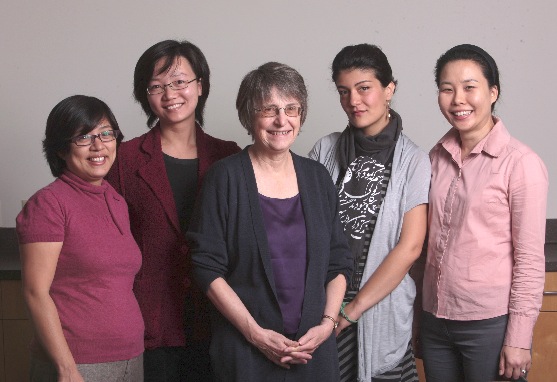 The Principal Investigator of the project is Elaine Tarone. Five graduate research assistants carried out the video-recording, transcription, translation, and creation of activities focused on the learning of these five languages:
Chinese: Fang (Andie) Wang
Japanese: Sachiko Horii
Korean: Yunseong Cheon
Persian: Sara Khanzadi
Spanish: Shawna Wicker
The work of each graduate research assistant benefited also from the expert input of more experienced researchers on the acquisition of each language, and the many language teachers and researchers who responded to presentations of this work at international professional conferences and workshops during the lifetime of the grant. We are particularly grateful for the guidance and suggestions of the following experts, among others:
Chinese:
Prof. Zhaohong Han, Teachers College Columbia University
Prof. Guoqiang Liu, Deakin University, AustraliaJapanese:
Prof. Noriko Ishihara, Hosei University, JapanKorean:
Prof. Haeyoung Kim, Duke UniversityPersian:
Dr. Nahal Akbari, Academic Director, Persian Language Flagship
Graduate Program, University of Maryland
Ma'ssoumeh Bemani Naeini, PhD, English Department, Islamic Azad
University-Mashhad Branch, IranSpanish:
Prof. Mandy Menke, University of Minnesota