Teaching Languages Online (TLO)
Introduction
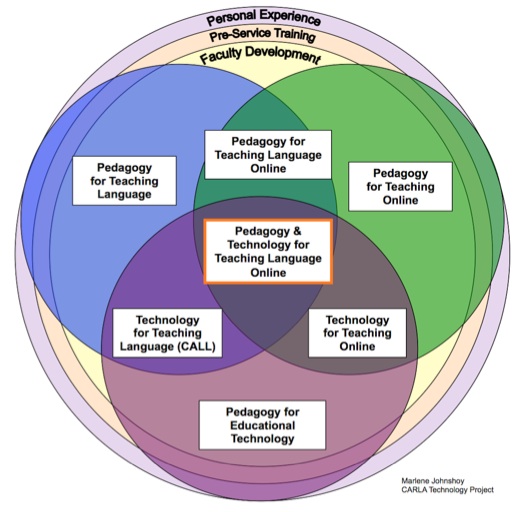 As the demand for online learning grows, teachers are being asked to teach or create online courses, but many of these teachers have little or no experience with online learning, either as teachers or as online learners themselves. Wood (2005) maintains that even for veteran teachers in the classroom, the transition to online teaching is difficult; teachers who are comfortable in the classroom are not necessarily good online teachers (Sidebar section). A completely online course has special issues and differences that teachers of traditional or even hybrid courses (where teachers have added some online components to their face-to-face courses) will not encounter (Conrad, 2004; Davis & Roblyer, 2005; Kassop, 2003). Emergency remote teaching filled a gap, but was a struggle for both teachers and students. Teachers need additional faculty development to learn new teaching methods and techniques for effective, well-planned online courses and to learn about the needs of the online learner (Palloff & Pratt, 2000, 2001, 2003). "It has been well documented that faculty need training and assistance to make the transition" to online teaching (Taylor & McQuiggan, 2008, para. 1).
Challenges for Online Language Teaching
Teaching Languages Online Project
To address the needs of online language teachers, the TLO project has done the following:
- The CARLA technology project presented the results of a survey that addresses the preparation and support that language teachers receive in order to teach online. A perceived lack of support gave impetus to this project and the resources below.
- A resource bibliography has been collected with around 600 resources to search for information on the preparation of teachers to teach online, both general and language-specific, along with guidelines, best practices, and dissertations about teaching online. There are also a variety of information on technology that would be helpful for online teaching. Most current information is now being added to the CARLAtech Diigo group and an additional Diigo group specifically for online teachers - Learning to Teach Online - has been added. CARLAtech is about any integration of technology for language teaching and learning, where Learning to Teach Online is specifically about good practice for teaching online.
- As part of the technology "teaching online" project, an online discussion group was started. Hosted in a Ning space, the discussion group hoped to provide support and inspiration for language teachers who are currently teaching online as well as those who are just starting out or even just thinking about teaching online. There were forums to ask questions, share experiences, offer advice, and find the latest research about teaching languages online. It was later disbanded in favor of more active groups on Facebook and Twitter.
- Workshops for experienced and new online language teachers and support staff have discussed challenges and successes with teaching online at international conferences (IALLT and CALICO) that focus on languages and technology. As a result of the first workshop at IALLT 2011, a ning was established to create an online discussion group for online language teachers. It was later disbanded, but other venues and groups are continuing the idea: check out the DL SIG at ACTFL, for example, and numerous Facebooks groups for language teaching and technology.
- A first step towards training teachers to teach online was the completely online technology summer institute on using the web for communication which was the starting point for the STARTALK program, Transitioning to Teaching Online (2013-2018) as well as the currently offered CARLA TTLO summer institute.