|
Example
3: La
Frontera:
The movement of products, people, and ideas between
the U.S. and Mexico
by Dan Dunagan
Context:
Student Characteristics
- L2 Proficiency Level: Pre-Advanced Level (ACTFL Integrated Performance Assessment, 2003)
- Age / grade level: Middle School – 8th grade
- L1 / L2 literacy level: Students are able to read and write in both English
(L1) and Spanish (L2). L1 skills are much greater than L2 skills. They are functionally
bilingual in the speaking and listening language modalities. In the modalities
of reading and writing, however, there are clear differences in L2 achievement.
- Ethnolinguistic background of students: The students are all members
of the language immersion program in a public middle school in a suburb of a
large Midwestern city. English is their first language. They have studied Spanish
since kindergarten. The student population is quite homogenous. Ninety-five
percent of the immersion students are white. The overwhelming majority also
come from two-parent families. In addition, over ninety percent have internet
access at home.
Program Model
- Program type: Immersion
- Program location: First tier suburb of a large city
- Student Population: an advanced Spanish
class of twenty-six eighth graders.
Context in which the IPA might be used
This IPA will be used during a two-week slice of a four-week unit
on Mexico. The focus of the two weeks will be economic and cultural
characteristics of
Mexico. Specific attention will be paid to the borderlands and the movement
of products, people, and ideas between the U.S. and Mexico.
Major Unit Concepts
- Culture
- Immigration
- Assimilation
- Urbanization
Generalizations
- Change is inevitable
- Progress is often accompanied by harsh new realities
- Cultures are constantly evolving
- Youth more readily accept new ideas than their elders.
Overview of the Task:
Introduction to the students:
Distinguidos miembros de la clase del Sr. Dunagan, ustedes tendrán la
gran oportunidad de participar en un viaje de aprendizaje. ¿Conocen la
cultura mexicana? Ustedes comen tacos, conocen a muchos hispanohablantes, y,
a veces, hablan español. Sin embargo, a veces creen demasiado en los
estereotipos de los mexicanos que muchas veces no representan la realidad compleja
y difícil de nuestros vecinos sureños. Durante esta unidad aprenderán
algunos aspectos de las identidades divergentes mexicanas.
Primero, escucharán una canción escrita e interpretada por uno
de los cantantes más conocidos de la música mexicana. Después,
explorarán los sentimientos diferentes entre tres generaciones de mexicanos
por presentar el papel de un miembro de una familia mexicana. Finalmente, escribirán
un ensayo sobre las diferencias entre la vida de un adolescente mexicano y la
vida de un adolescente minesotano.
(Translation)
Distinguished members of Sr. Dunagan's class, you will have the great opportunity of participating in a learning journey. Do you know about Mexican culture? You eat tacos, you know many Spanish-speakers, and sometimes, you speak Spanish. Nevertheless, sometimes you believe too much the stereotypes of the Mexicans that many times do not represent difficult and complex reality of our southern neighbors. During this unit, you will learn some aspects of the divergent Mexican identity.
First, you will listen to a song written and sung by one of the most well-known singers of Mexican music. Then, you will explore different feelings from three generations of Mexicans in order to present their role as a member of a Mexican family. Finally, you will write an essay about the differences between the life of a Mexican teen and that of a Minnesota teen.
Unit Outline
NOTE – As stated at the beginning of this IPA, this is a ten-day slice of a four-week unit on Mexico. Prior to this ten-day slice, the following topics were studied:
- Geography of Mexico,
- Indigenous empires (specifically the Maya and the Aztecs),
- Spanish conquest and colonial system (including the establishment of ejidos and haciendas)
- Agrarian reform
- 1910 Mexican Revolution
- The Bracero program (guest workers supplied by Mexico in order to make up for the lack of U.S. laborers during World War Two)
This background information is found in the following two texts: Mundo 21 and Gente, Lugares, y Cambio.
|
Timeline for Presentational Task:
|
Day 1:
|
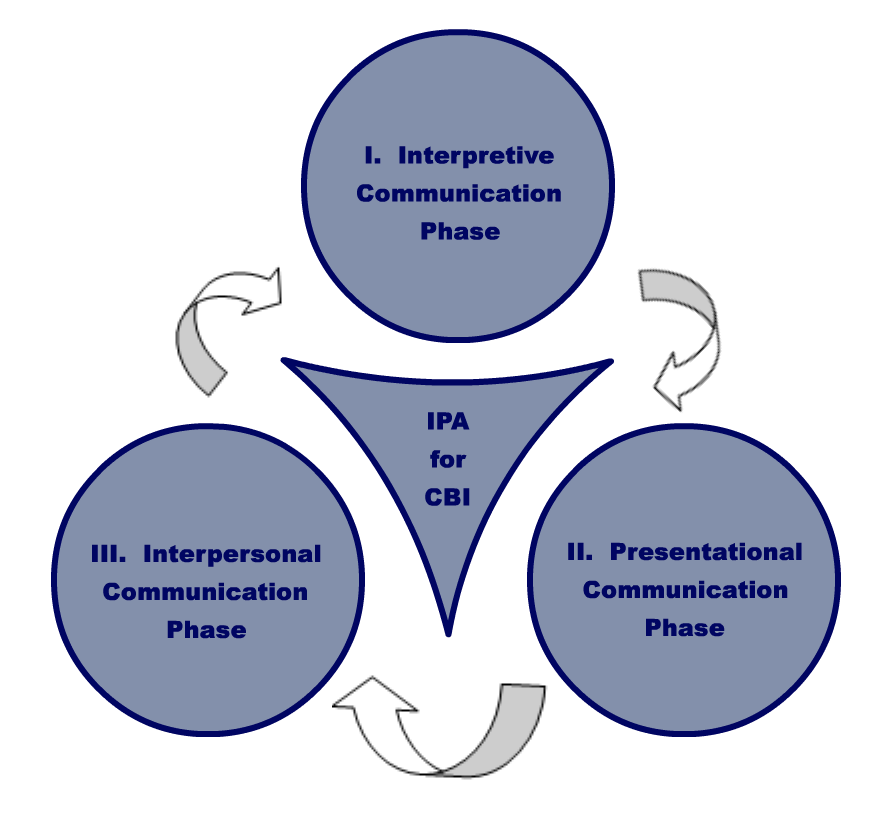
Interpretive
Task – El Mexico que se nos fue
|
Day 2:
|
Feedback on Interpretive Task
Reading on maquiladoras
|
Day 3:
|
Venn Diagram
Instructions for Presentational Task
• Brace Map
• First Draft
• Final Draft
|
Day 4:
|
Brace Map – done in class
Song – Canción 187 – Written and performed by Juan Gabriel – Interpretive
task using a variation of a cloze exercise (Geographic locations left blank). This song recounts the route an illegal immigrant worker takes through the Southwest United States.
|
Day 5:
|
Rough Draft due
- Peer review done in class
- Discussion of peer review
|
Day 6:
|
Reading on legal and illegal immigration from Mexico
- Instructions – Interpersonal task given
|
Day 7:
|
Interpersonal
task – After each group presents, we will do a brief review of what they did well and what they will want to improve.
Students not participating will be doing an interpretive task – watching the movie El Norte and responding to various questions from the movie.
|
Day 8:
|
Finish interpersonal tasks for any groups that have not finished.
Teacher provides feedback to each group about the performance on the interpersonal
task.
Finish the movie El Norte and the corresponding interpretivel task. At the end of the movie, there will be small group discussions about the students’ interpretations of the movie. The teacher observes these discussions and at times participates in order to verify comprehension (informally assessed).
|
Day 9:
|
Final Draft of the Presentational
Task Due
|
Day 10: |
Return final drafts to students. Students may make corrections and re-submit. |
Bibliography
ACTFL Integrated Performance Assessment Manual (2003). Alexandria, VA: American Council on the Teaching of Foreign Languages.
Basset, T. (n.d.). Peer edit response form. In Writing with traits. Online document http://litsite.alaska.edu/uaa/workbooks/writingtraits.html retrieved on April 18, 2005.
Center for Advanced Research on Language Acquisition (n.d.). Rating sheet for oral role plays and interviews: Post-secondary, year 2. Online document /assessment/VAC/evaluation/rubrics/types/figAnFrOralY2.html retrieved on April 18, 2005.
Gabriel, J. (1995). El México que se nos fue. México, D.F.: Bertelsmann de México.
Glencoe Online (n.d.). Peer review strategies. Online Document http://www.glencoe.com/sec/teachingtoday/weeklytips.phtml/224 retrieved on April 18, 2005.
Hall Haley, M.., & Austin, T. Y. (2004). Content-based
second language teaching and learning: An interactive approach. Boston:
Pearson Education.
Minnesota Articulation Project. (2002). Proficiency-oriented language instruction and assessment: A curriculum handbook for teachers (Rev Ed.). CARLA Working Paper Series. D. J. Tedick (Ed.). Minneapolis, MN: University of Minnesota, The Center for Advanced Research on Language Acquisition. Online Document /assessment/VAC/Evaluation/rubrics/types/figAnWriteFLIP.html retrieved on April 18, 2005.
Samaniego, F. A., Alarcón, F.X., & Rojas,
N. (1995). Mundo 21. Lexington, MA: D.C. Heath.
Tedick, D. (2005). CI 5662: Issues in Second Language Curriculum Design (course packet). University of Minnesota .
Navigation: Follow the IPA process or go directly to the section that
is of most interest to you by clicking on the appropriate category
|
 Center for Advanced Research on Language Acquisition (CARLA)